
Canada is making big changes to its work permit system in 2025. Immigration Refugees and Citizenship Canada (IRCC) is leading this reform to make the process clearer and fairer for temporary workers and their families. The country depends on foreign workers to help its economy grow, so the government wants a system that works better for everyone. This reform is one of the biggest updates in years. It changes how people apply for work permits and what employers need to do to hire foreign workers. These changes matter if you want to work in Canada, if you already have a job there, or if you run a business that hires international workers. This guide explains the main updates in the reform. It shows who will see the biggest effects and how workers and employers can get ready for the new system.

Why Canada Is Overhauling the Open Work Permit System in 2025
The main goal of the 2025 reform is to update Canada’s temporary work system so it protects workers and helps responsible employers while making sure immigration matches what the country needs for the future. Over the past few years IRCC has noticed more job shortages in different industries and more cases where workers are being treated unfairly. There have also been problems with how long it takes to process applications. The new rules try to fix these issues by making regulations stronger & improving digital systems. They also make it easier to understand who qualifies to work in Canada and possibly stay here permanently.


Major Rule Changes Affecting Temporary and Open Work Permit Holders
Streamlined Processing and Reduced Delays One of the most anticipated aspects of the reform is IRCC’s commitment to speeding up application and renewal timelines. Through advanced digital tools & automated background verification systems the approval process is expected to become more efficient and predictable. Faster approvals will benefit international graduates and caregivers as well as seasonal workers and existing residents who rely on timely documentation to maintain their legal status & job stability. Enhanced Documentation and Verification The new system introduces tighter checks on employment history and authenticity of job offers along with applicant identity verification. This is largely in response to past cases involving fraudulent documentation or misleading employment claims. Applicants may now be required to provide more detailed proof of work experience and verified employer letters. They will also need updated records of past employment in Canada and evidence confirming compliance with previous permit conditions. These steps are intended to prevent misuse of the system while creating a safer environment for legitimate applicants. Strengthened Protection for Vulnerable Workers The 2025 reforms place strong emphasis on shielding vulnerable workers from exploitation. This includes individuals employed in caregiving and hospitality as well as agriculture & other sectors that have historically seen high rates of labour abuse. The updated rules will allow IRCC to conduct more frequent employer compliance checks. They will also offer quicker access to open work permits for abused workers and provide better information about worker rights and available support services. This shift aims to ensure that every employee can work without fear of mistreatment regardless of nationality or skill level.
Inside IRCC’s New 2025 Eligibility and Compliance Structure
Revised Open Work Permit Eligibility Framework IRCC has restructured the eligibility requirements for Open Work Permits to address problems with the previous system where categories overlapped & created confusion. The updated framework uses a simpler model that makes it easier to understand who can apply and what conditions they must meet. New Priority Processing Groups IRCC has established specific groups that will receive priority processing. These groups include workers in sectors experiencing critical labour shortages & family members of principal applicants. International students who are moving into the workforce also fall into this category along with individuals who are applying for permanent residency through transitional pathways. The focus on these priority categories aims to speed up approvals in areas where Canada needs workers most urgently. Clearer Minimum Requirements The new framework provides better definitions for several key requirements. Applicants will now find clearer information about minimum employment hours and financial requirements. The documentation standards have been specified more precisely and language expectations for certain categories are now easier to understand. The conditions for renewing or upgrading permits have also been clarified. These improvements should help both applicants and immigration advisors navigate the application process with less confusion and fewer misunderstandings.

Breakdown of Key Open Work Permit Reform Categories
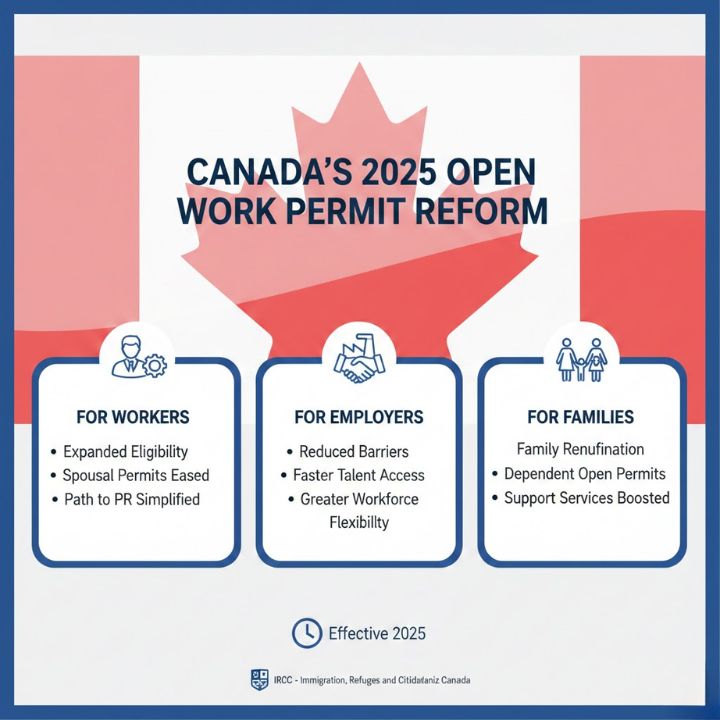
Updated Immigration Work Permit Requirements The government has introduced new eligibility rules that organize applicants into priority groups & reduce the amount of paperwork needed for approval. These changes make it easier for people to understand if they qualify and what documents they need to submit. Employers now face increased monitoring of their hiring practices. The verification processes have become stricter to ensure companies follow all regulations. Penalties for violations have also been strengthened to encourage better compliance with immigration laws. Family members of work permit holders benefit from easier application processes. Spouses and dependent children can now obtain open work authorization through simplified pathways that require less documentation and fewer steps than before. Processing times for work permit applications have improved significantly. The immigration department has implemented automation tools and upgraded its digital platforms to speed up approval times and reduce waiting periods for applicants. The government has also created better-defined routes for workers who want to transition from temporary status to permanent residency.
How the 2025 Changes Improve Flexibility for Workers and Families
Greater Mobility and Flexibility The updated Open Work Permit system provides workers with increased freedom to change jobs or employers while maintaining their legal status. This flexibility particularly helps newcomers who receive several job offers or want to explore better career options after they arrive in Canada. Improved Renewal and Application Procedures The renewal process has become more straightforward with less documentation required and clearer instructions for extending work authorization. Workers can now avoid employment gaps that previously created problems for thousands of temporary residents annually. Enhanced Family Stability The streamlined process for spouses & dependents represents one of the most significant improvements in the system. Families can now submit applications through unified channels that reduce processing times and help keep family members together throughout their Canadian residence. Contribution to Canada’s Economic Growth The system enables more efficient worker mobility while reducing bureaucratic obstacles that previously slowed down hiring processes. Employers can now address critical skill shortages faster. The economy gains through higher productivity and improved workforce planning while companies experience lower employee turnover rates.
New Obligations and Compliance Rules for Canadian Employers
The 2025 reform focuses heavily on making sure employers follow the rules. Companies that want to hire foreign workers through open permits need to meet higher standards and show they treat workers properly. Making Job Offers Clear and Honest Employers now have to provide complete and clear job offers that include salary information along with job duties and working hours. They must also explain workplace conditions and contract terms in detail. If employers give false information or leave out important details they can face penalties or lose their ability to hire foreign workers. More Inspections & Required Reports The government will conduct more surprise inspections of businesses. Companies may need to send in regular reports that prove they are following labour laws and paying workers the amounts listed in their contracts. These reports must also show that safety and training standards are being met and that work assignments are real. These steps exist to protect workers & make sure everyone gets treated fairly no matter what industry they work in. Consequences for Breaking the Rules Employers who break the guidelines can expect financial penalties & may be suspended from hiring programs. They might have to complete mandatory corrective action plans and could be added to a public list on the IRCC website that shows which employers have not followed the rules. The goal is to stop exploitation and encourage companies to hire people in an ethical way.
Practical Steps Workers and Employers Should Take Before 2025
Steps for Workers
– Collect your important work and identity papers ahead of time.
– Keep track of IRCC policy changes & important dates.
– Make sure your employer follows all regulations before you take a job.

– Get help from a lawyer or immigration expert if you need it.
– Be ready for online applications and digital systems.
Steps for Employers
– Check your company HR rules and make sure they match the new requirements.
– Keep your payment records & employee contracts current.
– Show your HR team what they need to know about the 2025 rules.
– Review your company practices regularly to find any problems.
– Learn about new labor laws that affect your business.
What the 2025 Open Work Permit Reform Means for Canada’s Future Workforce
The Canada Open Work Permit Reform 2025 marks an important change in how the country manages its temporary foreign worker system. The reform focuses on making processes clearer and protecting workers better while also making applications faster to process. IRCC is creating a structure that helps both workers and employers.